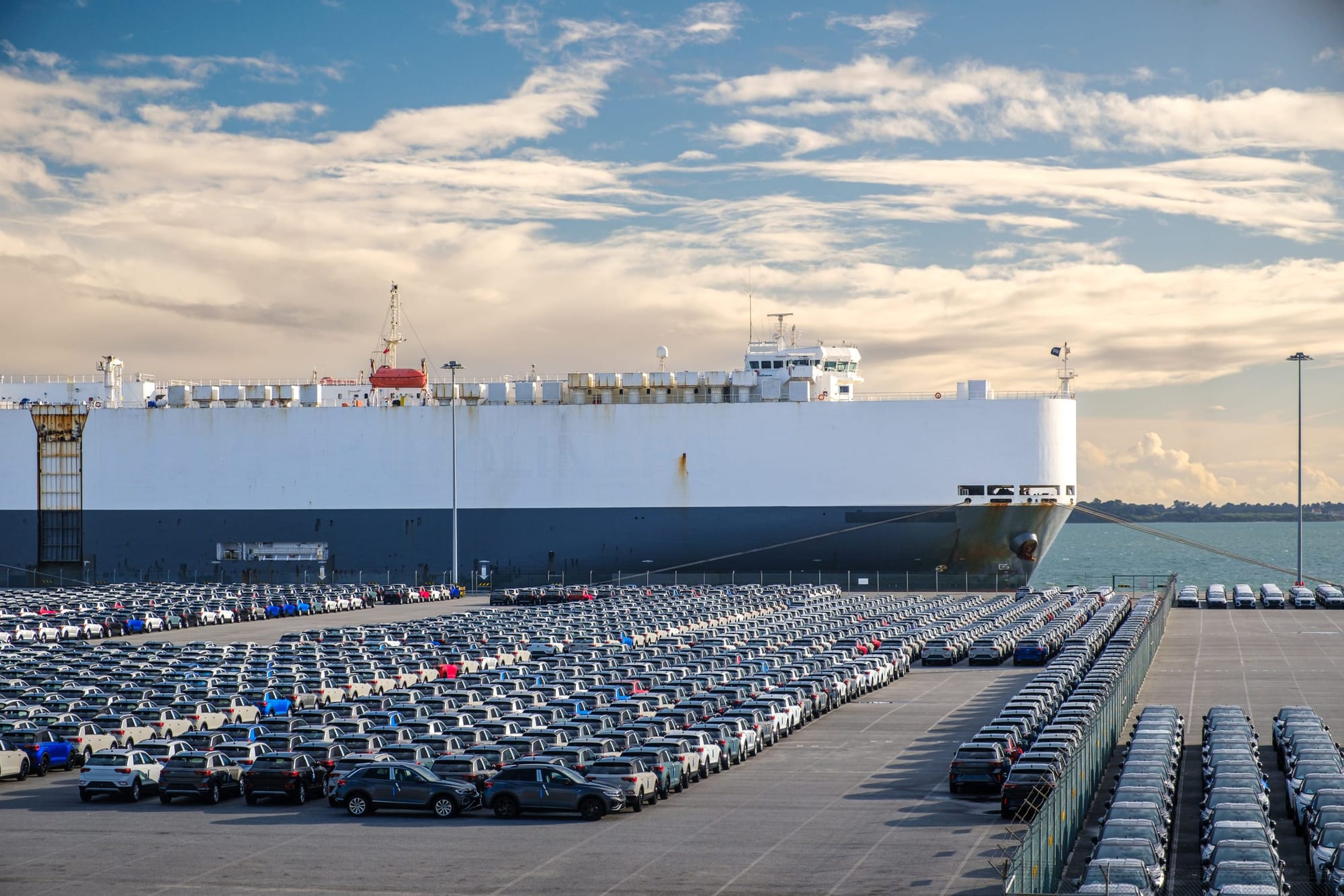
Personal Export Scheme (PES)
HMRC’s Personal Export Scheme lets overseas visitors, and UK residents moving abroad, buy a new or used car free of VAT and drive it in the UK before it is exported: for up to 6 months before a UK resident leaves, or up to 12 months for an overseas visitor. Only a VAT-registered dealer that operates the scheme can sell a car this way. We are not VAT registered and do not run the scheme ourselves. We find a dealer that does, help you through its paperwork, and plan the collection and shipping around the car’s final date for export.

What You Get
- New and used cars, motorcycles and motor caravans sourced from VAT-registered UK dealers that operate the scheme
- Help with the dealer’s VAT 410 form and the scheme’s conditions before you sign, so your deadlines are clear from the start
- Collection, the UK export declaration and shipping by RoRo or container, or by air when time is short, planned around your final date for export
- A standard price for the UK side and the sea leg. Collection at £1 per mile, marine insurance on container shipments, any pre-export inspection your country requires, and clearance, registration and delivery at your destination through a local agent are quoted separately
- Import duty and taxes in your country are yours to pay. A £1,000 deposit paid to us secures the deal and counts towards our charges; the balance is due in cleared funds before the car is loaded. We do not accept letters of credit, cheques, money orders or cash
How It Works
- 1
Choose the car
Tell us what you want and when you are leaving the UK. We look for a VAT-registered dealer that operates the scheme and has the car. Order any extras with the car so they go on its invoice.
- 2
Apply on form VAT 410
You complete and sign the form and give it to the dealer, which checks it and normally sends HMRC its copy at least 2 weeks before delivery. The car cannot be released until HMRC has approved the application.
- 3
Collect it and drive it here
You take delivery from the dealer in person and sign a receipt. The car is then yours to drive in the UK for up to 6 months, or up to 12 months as an overseas visitor, until the final date for export shown on your papers.
- 4
Export it by the deadline
You drive the car to the departure port, or we collect it. We file the UK export declaration and ship it by RoRo or container, or by air when time is short, with the booking planned so that it leaves by that date. You then tell DVLA it has been exported.
- 5
Stay abroad with it
You and the car must stay outside the UK for at least 6 consecutive months from the date of export. Import duty and taxes in your country are paid by you as the importer.
How the Personal Export Scheme Works
A summary for buyers of HMRC’s VAT Notice 707, Personal Export Scheme, which is published on GOV.UK and linked under Useful Links. This summarises the notice as it stood in October 2026; HMRC last updated it on 17 July 2025. It is general guidance, not tax advice. The notice and the VAT 410 form you sign set the conditions, and they are the ones that apply. The scheme covers vehicles bought in England, Scotland and Wales and exported from the UK. A vehicle bought in Northern Ireland is covered only if it goes to a country outside the EU.
Who Can Use the Scheme
The scheme is for people who are leaving the UK. The notice lists two groups, and no others:
- Overseas visitors who have not been in the UK for more than 365 days in the 2 years before they apply, or more than 1,095 days in the 6 years before they apply
- UK residents who are moving abroad
Either way, you must plan to leave with the vehicle, and for you and the vehicle to remain abroad for at least 6 months.
When you can apply
Apply no more than 15 months before you plan to leave if you are an overseas visitor, or no more than 9 months before if you are a UK resident.
If you will not drive it here first
The point of the scheme is that you can use the car in the UK before it goes. If the car is to be exported without being used here, the scheme is not needed: the ordinary export rules in VAT Notice 703 apply instead, and our tax-free car exports page explains them.
Importing a car is difficult in some countries. Before you buy, HMRC suggests asking the destination country’s embassy or high commission in the UK what restrictions, paperwork and costs you may face.
Which Vehicles and Which Dealers
The scheme covers new and used motor vehicles, including motorcycles and motor caravans. It does not cover pedal cycles or trailer caravans.
Only from a dealer that operates the scheme
You can only buy under the scheme from a business that operates it, and only VAT-registered businesses can. The scheme is optional for dealers, so not every dealer offers it. The dealer must invoice the car directly to you, the person who applied.
We are not VAT registered and do not operate the scheme, so the car is never sold to you by us and no VAT passes through us. We find a dealer that runs the scheme and has the car you want.
Extras
Factory-fitted or dealer-fitted extras on a new car, and dealer-fitted extras on a used car, are free of VAT only if they are ordered with the car and included on its invoice. Extras ordered later carry VAT.
Form VAT 410
You apply on form VAT 410, which the dealer can give you or you can download from gov.uk. The dealer must also give you sections 1 to 7 of Notice 707 to read. By signing the form you declare that you have read and understood them and will meet every condition of the scheme. Giving false information on the form is an offence. You hand the form back to the dealer and keep the customer copy.
The dealer sends HMRC its copy at least 2 weeks before the delivery date. The scheme works by approval in advance: the dealer must not release the car until HMRC has approved the application. A form that is incomplete or wrong is sent back for correction, which can delay delivery.
If you are leaving the UK within a month of applying, the dealer can use HMRC’s urgent delivery procedure and hand over the car within 2 weeks of the form being completed. It cannot be used if your application was rejected or returned for correction, or if you have made more than one application in 6 months.
A car bought at a price that included VAT cannot have that VAT refunded later, even if you then export it. The scheme has to be used when you buy.
Time Limits
The final date for export is shown on your papers: on the pink registration document (VX302) for a new car, or on the VAT 410 form for a used car. The limits behind it are:
- Using the car in the UK: an overseas visitor can take delivery and use it during the last 12 months of their stay, and a UK resident during the last 6 months before leaving
- Exporting it: within 12 months of delivery for an overseas visitor, or 6 months of delivery for a UK resident
- Staying away: you and the car must then stay outside the UK for at least 6 consecutive months from the date of export
The notice asks you to book shipping early enough to be certain the car leaves by its due date. Tell us your final date for export when you ask for a quote and we will plan the collection and shipping around it.
The 6 months are counted from the date the car is exported, for you as well as the car. If the car will be shipped some time before you leave, ask HMRC’s Personal Transport Unit how that affects you.
Trips abroad before the final date
If the car goes abroad on a trip before its final date for export, declare it to customs at the place where it comes back into the UK. Show them the VX302 for a new car, or the VAT 410 form for a used one.
Driving the Car in the UK Before Export
Delivery
You must take delivery of the car from the dealer in person in the UK and sign a certificate of receipt. If someone else has to take delivery for you, you need written permission from HMRC’s Personal Transport Unit first.
Registration and insurance
The dealer registers the car for you. A new car is registered with DVLA as a personal export vehicle and gets a pink registration document (VX302). For a used car, the dealer tells DVLA of the change of keeper. DVLA’s guidance says that on a new car you still pay vehicle tax and the registration fee, even though you do not pay VAT.
HMRC recommends insuring the car for the full price you would have paid with VAT. If it is stolen or written off before it is exported, the VAT you did not pay becomes due.
Who may drive it
Other people may drive the car only while you are still in the UK yourself, and only if they are:
- your spouse or civil partner
- a chauffeur
- someone else who qualifies for the scheme, is also leaving the UK and has your permission
These are HMRC’s VAT conditions, and the usual road traffic law applies as well.
These limits are on other drivers, not on you: you can use the car as normal until it is exported, including driving it to the departure port. If you would rather we collect it, we move it on a transporter, so nobody outside this list drives it.
No selling, hiring or using it as security
Until the car is exported you must not sell it, hire it out, give it away, pledge it, use it as security or dispose of it in any other way in the UK, or attempt any of these.
Exporting the Car, and What Happens If Plans Change
When the car leaves
We file the UK export declaration and ship the car. You then tell DVLA it has gone: for a new car, fill in the tear-off part of the VX302, and for a used car, complete the V5C as the notice describes. Either goes by post to the DVLA address printed on it. DVLA then sends you a registration certificate, which the notice says lets you register the car in your new country.
With a used car, if you will leave the UK within 14 days of buying it, tell the dealer before you buy. The dealer then reports the export to DVLA, and you take the V5C with you, still in the previous keeper’s name.
If the car is not exported in time
If the car has not left the UK by its final date for export, the VAT you did not pay becomes payable and HMRC can take the car away. The same applies if any other condition is broken: VAT is due on the car’s value when it was bought, and the car can be seized. That VAT is yours to pay as the buyer.
If your plans change
Contact HMRC’s Personal Transport Unit straight away, at PTUAssurance@hmrc.gov.uk. Once it is clear the car cannot be exported by its due date, it can no longer be kept free of VAT. The full VAT you saved is also due if you or the car will be back in the UK before 6 consecutive months have passed from the export date. The unit will explain how to pay it.
Bringing the car back to the UK
If you bring the car back to the UK later, tax is usually due when it is imported, unless you qualify for relief. Without relief, VAT is charged on the car’s value at that time if it comes back 6 months or more after its final date for export and you can prove that you and the car were outside the UK for at least 6 consecutive months. In any other case you pay the VAT you saved when you bought it. Once the car is back for good it must be registered and licensed with DVLA, with proof that VAT has been paid or that you are exempt, unless it will not be used or kept on public roads.
Our Other Export Services



Ready to Get Started?
Tell us the vehicle and the destination — we'll confirm the price, the paperwork and the next available sailing.